New Construction Homes in Tampa
Inside the city it is infill and towers; the big subdivisions are out in the county
Resale single-family homes in Tampa have a typical value of $395,087 on Zillow's index, and the city's median home was built in 1985, so a new house inside city limits is the exception rather than the rule. Most buyers searching for new construction in Tampa end up choosing between infill houses and townhomes in established neighborhoods, new condos near downtown, and master-planned subdivisions in places like Riverview and Wimauma, where typical values run $363,056 and $344,049.
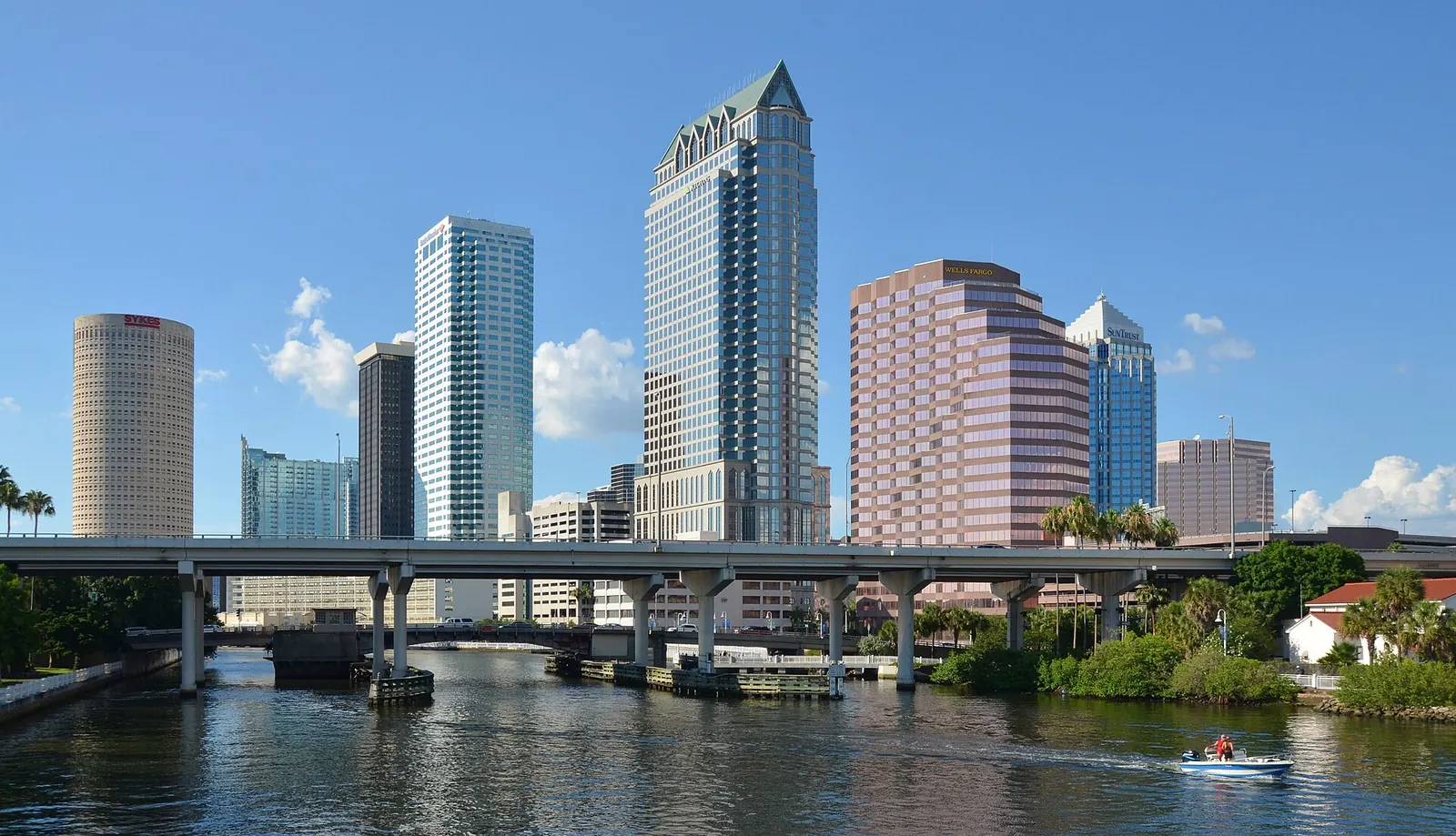
- Typical single-family home value
- $395K Tampa, Zillow, September 2026
- Past year
- +0.4%
- Past 5 years
- +20.8%
- Lower third of the market
- $240K typical value
- Upper third
- $689K typical value
Three kinds of new construction around Tampa
The City of Tampa is largely built out. Census data shows half of its homes are single-family detached and 28% are in buildings with ten or more units. New homes come from three places:
- Infill inside the city. An older house is torn down and replaced by one larger home or two to four townhomes. This is common in South Tampa, the Heights neighborhoods and close-in areas. Small builders and custom builders dominate.
- New condo and apartment towers. Downtown, the Channel District and Water Street Tampa have added high-rise residential buildings. Buying a new condo here falls under Florida's developer condo rules.
- Suburban master-planned communities. Large subdivisions by national and regional builders sit mostly in unincorporated Hillsborough County to the south and east, and in Pasco County to the north. They often have Tampa mailing addresses or are marketed as Tampa, but they are a commute away.
Zillow Home Value Index, mid-tier, seasonally adjusted. Hover to see any date.
Data table
| Month | Single-family | All homes |
|---|---|---|
| Dec 2012 | $113,599 | $109,930 |
| Dec 2013 | $135,883 | $131,281 |
| Dec 2014 | $150,795 | $145,119 |
| Dec 2015 | $171,094 | $163,822 |
| Dec 2016 | $196,773 | $187,616 |
| Dec 2017 | $218,039 | $208,004 |
| Dec 2018 | $235,129 | $224,793 |
| Dec 2019 | $248,036 | $237,482 |
| Dec 2020 | $278,129 | $265,578 |
| Dec 2021 | $338,796 | $323,523 |
| Dec 2022 | $399,271 | $382,955 |
| Dec 2023 | $410,686 | $392,306 |
| Dec 2024 | $410,834 | $391,097 |
| Dec 2025 | $393,334 | $373,729 |
| Sep 2026 | $395,087 | $375,619 |
New versus resale: what the numbers say
Use resale prices as the yardstick. In Tampa, a typical three-bedroom is $382,026 and a four-bedroom $561,556. The lower third of the market tops out around $239,812 and the upper third starts near $688,736.
Suburban areas where most new subdivisions are going up are cheaper on average. Typical all-home values: Ruskin $309,768, Plant City $337,742, Wimauma $344,049, Seffner $351,494, Brandon $353,216, Riverview $363,056. North of the city, Lutz is $486,345 and Odessa $684,962. A new four-bedroom in the southern suburbs often costs less than a resale four-bedroom in the city, while a new infill house in South Tampa usually costs well above anything in those suburbs.
The trade is location against age. In the city you buy proximity to downtown, Westshore and the airport. In the suburbs you buy a newer house and lower insurance, and you pay with drive time and, usually, a CDD.
- 1 bedroom$158K
- 2 bedrooms$266K
- 3 bedrooms$382K
- 4 bedrooms$562K
- 5+ bedrooms$902K
Zillow index by bedroom count, all home types.
- Odessa$687K
- Lutz$504K
- Citrus Park$423K
- Valrico$415K
- Tampa$395K
- Temple Terrace$373K
- Riverview$366K
- Brandon$357K
- Seffner$352K
- Wimauma$344K
- Plant City$339K
- Ruskin$311K
- Sun City Center$306K
Zillow index.
Cash you need to buy at $395,000
| All cash | Mortgage, 20% down | Foreign national loan, 35% down | |
|---|---|---|---|
| Down payment | $395,000 | $79,000 | $138,250 |
| Buyer closing costs | $1,450 | $6,713 | $6,387 |
| Total at closing | $396,450 | $85,713 | $144,637 |
Includes Florida doc stamps on the note ($0.35 per $100 borrowed), the 0.2% intangible tax on the mortgage, the lender's title policy, settlement and recording fees and typical lender fees. Excludes prorated taxes and HOA. For your exact numbers use the closing cost calculator.
Builder incentives, base price and lot premiums
When the resale market is flat, as Tampa's is now with a 0.4% one-year change, production builders compete with incentives. Common forms are closing cost credits, rate buydowns and free upgrades. Read them closely.
- Most incentives require you to use the builder's preferred lender and title company. You can use any lender you like, but you usually give up the incentive if you do. Compare the full loan estimate from both, including the rate and points.
- The advertised base price rarely matches what people pay. Lot premiums (corner, pond, preserve view) and structural options can add tens of thousands.
- Design-center upgrades are priced by the builder. Some, like flooring, are often cheaper to do after closing; others, like electrical rough-ins or a larger slab, are only practical during construction.
CDD and HOA: the costs that sit outside the price
Many new subdivisions in Hillsborough County are inside a Community Development District. A CDD is a special district that borrowed to build roads, water, sewer and amenities, and repays that debt through an annual assessment on each home. The assessment appears on your property tax bill as a non-ad valorem line, so it is easy to miss when you compare listings.
Ask the builder for the exact CDD debt and operations amounts for your lot, how many years the bond runs, and whether a payoff is possible. Add the HOA dues, which are separate. A house that looks cheaper than a city resale can end up with a similar monthly cost once CDD, HOA and a longer commute are counted.
Infill houses and townhomes in the city usually have no CDD; townhomes often have an HOA.
Warranties, inspections and the contract
New homes usually come with a builder warranty in a 1-2-10 structure: one year on workmanship and materials, two years on major systems, and ten years on structural defects. Read what counts as each and how claims are filed.
Hire your own inspector, even on brand-new construction:
- A pre-drywall inspection to see framing, straps, plumbing and electrical before they are covered.
- A final inspection before closing, so the punch list is in writing.
- An 11-month inspection, just before the one-year warranty ends.
Builder contracts are written by the builder. Check the deposit amount and where it is held, what happens if construction runs late, and when the builder can change the closing date. For new condos, Florida law gives you 15 days to cancel after signing or receiving the required documents, and deposits up to 10% of the price must be held in escrow.
Insurance and taxes on a new Tampa home
New construction is one of the clearest ways to lower insurance costs in Florida. A new roof, current wind code, impact-rated openings and modern systems mean no 4-point inspection and better wind mitigation credits. Still, get flood information for the lot: some new subdivisions sit near wetlands or retention ponds, and FEMA zones apply to new homes too.
Property taxes start from the finished assessed value. In the first year you may see a tax bill based only on the land if the house was not complete on January 1, then a much larger bill the next year. Budget for the full amount. If it is your permanent residence, apply for homestead; in 2026 the exemption is up to $51,411 off assessed value.
Your agent versus the builder's sales rep
Whoever greets you at a Tampa-area model home is paid by the builder. Nothing wrong with that, though it means nobody in that office is looking out for your interests on price, lot choice or contract terms. Most builders let you bring your own agent at no cost to you, as long as the agent is registered on your first visit. If you are comparing a new suburban home with resale options in the city, a shortlist that puts both side by side with full monthly costs is the most useful place to start.
What buyers ask me
Are there new construction homes inside Tampa city limits?
Yes, but mostly as infill: single houses or townhomes replacing older homes in established neighborhoods, plus new condo towers downtown. Large new subdivisions are mainly in the surrounding county.
Is new construction cheaper than resale in Tampa?
It depends where. New homes in southern suburbs such as Wimauma ($344,049 typical value) or Riverview ($363,056) can cost less than city resale homes. New infill in South Tampa usually costs more than resale nearby.
What incentives do Tampa builders offer?
Closing cost credits, mortgage rate buydowns and upgrade packages are common. They often depend on using the builder's lender, so compare the full loan cost before deciding.
What is a CDD fee on a new Tampa home?
A Community Development District assessment pays for infrastructure in many new subdivisions. It appears on your property tax bill each year, in addition to any HOA dues.
Do I need an inspection on a brand-new house?
Yes. A pre-drywall inspection, a final inspection before closing and an 11-month warranty inspection catch problems while the builder is still responsible for fixing them.

Get a shortlist that fits your budget
Tell me what you're looking for and I'll send real listings with the full cost of owning each one: HOA or condo fees, property tax at your price, insurance, and closing costs. No newsletters, no pressure.
- MLS listings, including ones that just hit the market
- Condo budget, reserves and inspection history checked before you offer
- Fully remote if you need it: video tours, e-signing, wire to escrow
Or reach me directly: (754) 203-9632 · info@danmarusinhomes.com · WhatsApp on the same number
Check the costs yourself
Data: Zillow Home Value Index (ZHVI), Zillow Research, latest month September 2026; U.S. Census Bureau, American Community Survey 2020–2024 5-year estimates. Figures for small areas carry margins of error. These are planning numbers, not an appraisal of any property.