Moving to Miami, FL
What relocating buyers should know about Miami before picking an address
Miami is a good place to live for buyers who want a big, year-round city and can carry South Florida's insurance costs: Zillow puts the typical home at about $583,705, up 40.1% over five years but only 1.4% in the last twelve months. Condos run about $383,531 and single-family houses about $664,415, so your first decision is the type of home, and the neighborhood comes second. This page covers what the city is like from a buyer's angle, and what people moving here tend to misjudge.
- Typical home value
- $584K Miami, Zillow, September 2026
- Past year
- +1.4%
- Past 5 years
- +40.1%
- Lower third of the market
- $353K typical value
- Upper third
- $982K typical value
Miami is a tower city first
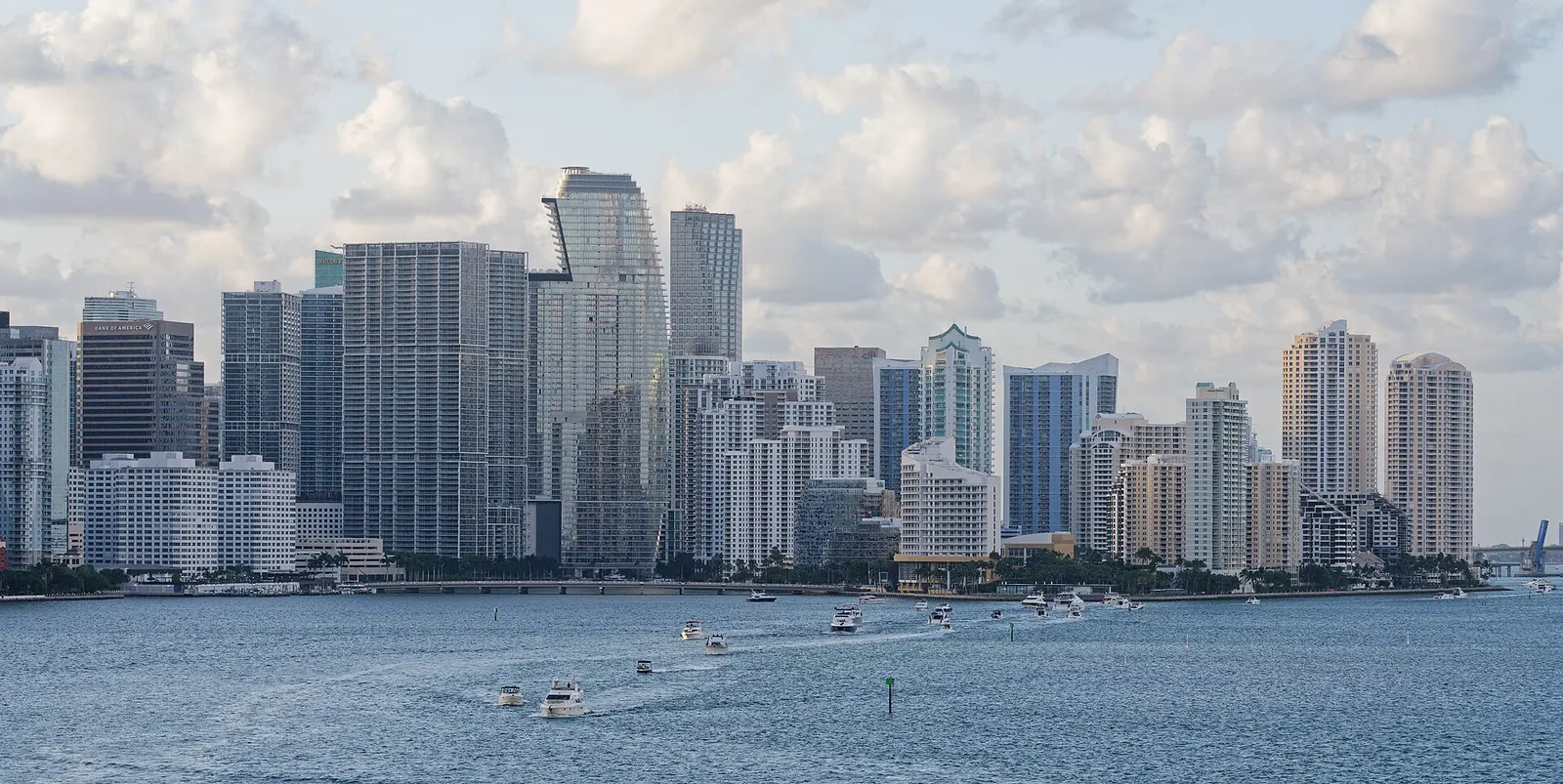
Census data shows 55.3% of Miami's housing units sit in buildings with 10 or more units, and only 22.4% are detached single-family homes. Mobile homes are almost absent at 0.5%. The median building dates to 1979. In practice that means most people moving into the City of Miami end up in a condo, and a lot of those condos are in buildings now going through Florida's milestone inspection and reserve study requirements.
Houses exist, mostly in older neighborhoods west and south of the core. A house costs roughly $280,000 more than a condo at the typical level, and the gap shows up clearly by bedroom count: about $450,924 for a 2-bedroom and $620,623 for a 3-bedroom. Moving from two bedrooms to three in Miami usually means moving from a tower to a house, so the jump covers a change of lifestyle as well as square footage.
Zillow Home Value Index, mid-tier, seasonally adjusted. Hover to see any date.
Data table
| Month | All homes |
|---|---|
| Dec 2012 | $200,649 |
| Dec 2013 | $248,094 |
| Dec 2014 | $275,156 |
| Dec 2015 | $305,102 |
| Dec 2016 | $320,420 |
| Dec 2017 | $331,646 |
| Dec 2018 | $343,305 |
| Dec 2019 | $353,119 |
| Dec 2020 | $374,584 |
| Dec 2021 | $431,724 |
| Dec 2022 | $527,235 |
| Dec 2023 | $566,529 |
| Dec 2024 | $593,035 |
| Dec 2025 | $577,203 |
| Sep 2026 | $583,705 |
The City of Miami versus a Miami address
The City of Miami has about 459,745 residents, a fraction of Miami-Dade County. Many places people call Miami, such as Kendall, Westchester and Country Walk, are unincorporated county land with a Miami mailing address. Coral Gables, Miami Beach, Doral and Hialeah are separate cities with their own millage rates and building departments.
This affects your tax bill, permit process and which government answers the phone after a storm. When I compare homes for a client, I check the jurisdiction of each address before we compare taxes, because two houses a mile apart can sit under different city governments.
- South-West Coconut Grove$1.9M
- Fair Isle$1.66M
- Biscayne Island$1.54M
- North-East Coconut Grove$1.53M
- South Miami$1.06M
- Upper Eastside$874K
- Shenandoah$864K
- Sunset$792K
- Coral Way$715K
- Coral Terrace$693K
- Westchester$684K
- Westwood Lake$655K
Show all 20
- Country Walk$639K
- Richmond West$626K
- Little Haiti$616K
- Tamiami$608K
- Glenvar Heights$607K
- Brickell$598K
- Wynwood - Edgewater$587K
- Palmetto Estates$582K
Zillow neighborhood index, the 20 priciest of the largest neighborhoods.
- South-West Coconut Grove+77.4%
- North-East Coconut Grove+63%
- South Miami+58%
- Little Haiti+56.5%
- Fair Isle+53.4%
- Shenandoah+49.9%
- Westchester+47.9%
- Sunset+47.8%
- Palmetto Estates+46.9%
- Liberty City+46.2%
- Richmond Heights+45.4%
- Tamiami+44.4%
- South Miami Heights+44%
- West Perrine+43.8%
- Upper Eastside+43.6%
Change in the Zillow index over 60 months.
- 1 bedroom$351K
- 2 bedrooms$451K
- 3 bedrooms$621K
- 4 bedrooms$785K
- 5+ bedrooms$1.27M
Zillow index by bedroom count, all home types.
- Coral Gables$1.57M
- Miami$584K
- Cutler Bay$563K
- Doral$549K
- The Hammocks$541K
- Miami Beach$531K
- Miami Gardens$474K
- North Miami Beach$453K
- Hialeah$444K
- Homestead$437K
- Aventura$423K
- North Miami$422K
- Fountainbleau$302K
Zillow index.
Cash you need to buy at $584,000
| All cash | Mortgage, 20% down | Foreign national loan, 35% down | |
|---|---|---|---|
| Down payment | $584,000 | $116,800 | $204,400 |
| Buyer closing costs | $4,445 | $10,540 | $10,058 |
| Total at closing | $588,445 | $127,340 | $214,458 |
Includes Florida doc stamps on the note ($0.35 per $100 borrowed), the 0.2% intangible tax on the mortgage, the lender's title policy, settlement and recording fees and typical lender fees, plus the owner's title policy, which Miami-Dade buyers usually pay. Excludes prorated taxes and HOA. For your exact numbers use the closing cost calculator.
Who lives here and how the city runs
The median age in Miami is 39.3, and 15.9% of residents are 65 or older. Only 4.2% of homes are seasonal, a low share for South Florida. Miami Beach, across the bay, is above 20%. The city is a working place with commuters, students and families, and that shows in traffic and in how full neighborhoods stay in August.
Getting around is mostly by car. I-95, US-1, the Dolphin Expressway (SR 836), the Palmetto Expressway (SR 826) and the Florida Turnpike carry most trips. Metrorail connects Dadeland, Downtown and Miami International Airport, and the free Metromover loops through Downtown and Brickell. Brightline runs from Downtown to Fort Lauderdale, West Palm Beach and Orlando. The University of Miami sits in Coral Gables, and Florida International University's main campus is in the western suburbs.
Prices: where the budget goes
Zillow's lower third of Miami homes sits around $352,706 and the upper third around $981,623. That range is wide because the city mixes small older condos with bayfront houses. The one-year numbers split by type: single-family values rose 2.3% while condos slipped 1.6%. Condo buyers currently have more room to negotiate, mainly in older buildings facing large reserve contributions.
Nearby cities change the math. Hialeah is around $443,765, Homestead about $437,198 and North Miami about $421,601, while Coral Gables sits near $1,571,133. Buyers who need a house and a yard often widen the search to those cities and accept a longer drive.
Storms, flooding and the insurance line
Hurricane season runs June 1 to November 30. Miami-Dade and Broward fall in the High-Velocity Hurricane Zone of the Florida Building Code, which sets the strictest rules in the state for windows, roofs and openings. Homes built or upgraded to that standard usually insure better.
For any address, check the FEMA flood zone, ask the seller for the roof age and any wind mitigation report, and get an insurance quote during the inspection period. Lenders require flood insurance in high-risk A and V zones, and it is a separate policy. Hurricane deductibles are a percentage of dwelling coverage, often 2% to 10%. For a condo, read the association's master policy and its deductible too, since a large storm claim can turn into a special assessment.
Taxes and the mistakes newcomers make
Florida has no state income tax, which is the main financial reason many people move here. Property tax is where Florida collects instead. A permanent resident can claim homestead, worth up to $51,411 off assessed value in 2026, and Save Our Homes then caps yearly assessment increases at 3% or CPI. A sale resets the assessed value to the price you paid, so a long-time owner's low bill tells you little about yours.
Without homestead, a second home or a Canadian's winter place gets no exemption and only a 10% cap on non-school levies. On a Miami condo bought at the typical $383,531, the exemption comes off the assessed value from the first full year, and the gap between the two caps widens every year after that, so ask for a tax estimate under both scenarios before comparing monthly costs.
The most common mistakes I see: budgeting from the seller's taxes, comparing condo prices without the monthly fee and reserve status, assuming a Miami address means City of Miami, and getting the insurance quote after the inspection period has closed. Each of these is easy to fix before you sign. This isn't legal or tax advice. If you tell me how you'll live and what you can spend each month, a shortlist of areas and buildings is the logical next step.
What buyers ask me
Is Miami a good place to live?
For buyers who want a large, year-round city with an international airport and no state income tax, yes. The trade-offs are high insurance costs, traffic, and a housing stock that is mostly condos, so families wanting a house often look beyond the city limits.
How much do you need to buy a home in Miami?
Zillow's typical values are about $383,531 for a condo and $664,415 for a single-family house. Add closing costs, insurance and, for condos, the monthly association fee when you set a budget.
What are the pros and cons of living in Miami?
Pros: no state income tax, a big job market, MIA and Brightline, and a wide range of neighborhoods. Cons: hurricane and flood exposure, insurance costs, older condo buildings with rising fees, and car-dependent commutes.
What should I know before moving to Miami?
Check the jurisdiction of any address, the FEMA flood zone, the roof age and the condo association's reserves before you commit. Budget taxes at your purchase price, not the seller's bill.

Get a shortlist that fits your budget
Tell me what you're looking for and I'll send real listings with the full cost of owning each one: HOA or condo fees, property tax at your price, insurance, and closing costs. No newsletters, no pressure.
- MLS listings, including ones that just hit the market
- Condo budget, reserves and inspection history checked before you offer
- Fully remote if you need it: video tours, e-signing, wire to escrow
Or reach me directly: (754) 203-9632 · info@danmarusinhomes.com · WhatsApp on the same number
Run the numbers for your purchase
Data: Zillow Home Value Index (ZHVI), Zillow Research, latest month September 2026; U.S. Census Bureau, American Community Survey 2020–2024 5-year estimates. Figures for small areas carry margins of error. These are planning numbers, not an appraisal of any property.